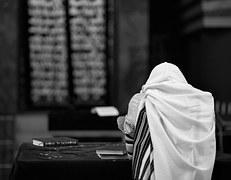
Here’s a saying for you, “Jesus Christ is the head of the church”. At face value this is certainly true. But let’s dig a little deeper. Where did the word “church” get its origins and how does this relate to Rabbi Yeshua? “Church” comes from the Greek word “ekklesia”. It is found in the Apostolic Writings over 112 times. It is interpreted as the word “church” 110 times and two times as the word “assembly”. It is used to refer to a group of people who are “called out” to meet together for a common purpose. Strong’s Concordance first definition of “ekklesia” is “an assembly”.
One of the first references in our English Bibles to use the word “church” is in Matthew 16:18, “And I also say to you that you are Peter, and on this rock I will build My church; and the gates of Hades shall not prevail against it.” With this translation (New King James Bible) one would believe Yeshua is building a “church” for us. However, if we went to a truer translation (Complete Jewish Bible) this verse would read “I also tell you this: you are Kefa (which means ‘Rock”,) and on this rock I will build My Community, and the gates of Sh’ol will not overcome it.”
Interestingly enough the Greek word for “Synagogue” also translates to “house of assembly" or “Kahal” in Hebrew. It is also translated as “community” or “congregation”. Never was the word Kahal referred to as the Temple. It was always a meeting place for the assembly of Jewish believers.
Here is a fact. In the Tanakh (“Old Testament”), the word “assembly” occurs many, many times. It refers to the gathering of the Israelites – to worship, to pray, to serve HaShem. Verses include:
Deuteronomy 16:8 “Six days you shall eat unleavened bread, and on the seventh day there shall be a sacred assembly to Yahweh your Elohim.”
Joshua 8:35 “There was not a word of all that Moses had commanded with Joshua did not read before all the assembly of Israel.”
“Assembly” and “Synagogue”...
Later through Scripture we see the word “assembly” interchanged with the word “synagogue”. According to some Jewish traditions the synagogue first arose out of a need for a sanctuary away from the Temple. This most likely occurred after the destruction of the first Temple. But, our first glimpse of this word in the Apostolic Scripture is in Matthew 4:23 “And Jesus went about all Galilee, teaching in their synagogues, preaching the gospel of the Kingdom, and healing all kinds of sickness and all kinds of disease among the people.” (New King James Bible). If you look up the Greek word for “synagogues” in this verse the definition is: “sunagoge” an assembly, congregation.
Of course you are still thinking that even though synagogue and church have their roots in the same word – assembly – they must be two different places. No, I don’t agree, but this is what we have been taught. I guess if you were trying to separate or distinguish yourselves as a unique group of people, i.e. Christians, who do not have anything to do with Judaism, you may believe church and synagogue are two different words. The translations into these words are different – but the meaning is the same.
And I contend this is exactly what Yeshua was saying to Peter when He said to build His assembly upon this rock. He was saying to build the Jewish meeting place, the Jewish assembly upon this rock. To build the “synagogue” upon this rock. Not a “new” religion that dismissed the Torah. But to continue teaching the Torah, because that is just what Rabbi Yeshua had taught His talmidim to do!
Let’s see if this translation to “assembly” or even the word “synagogue” makes any sense in the following verses:
Matthew 18:16-18 “But if he will not hear, take with you one or two more, that ‘by the mouth of two or three witnesses every word may be established’. And if he refuses to hear them, tell it to the synagogue (church). But, if he refuses even to hear the synagogue (church) let him be to you like a heathen and a tax collector.”
This is very interesting. Yeshua is quoting the Torah “every two or three witnesses” is from Deuteronomy 17:6. Of course He is speaking to the synagogue, not to a “church”. The “church” would say you wouldn’t have to follow this Law anymore.
Acts 2:46-47 “So continuing daily (the first talmidim) with one accord in the Temple, and breaking bread from house to house, they ate their food with gladness and simplicity of heart, praising Elohim, and having favor with all the people. And Adonai added to the synagogue (church) daily who were being saved.” First of all know this; many early manuscripts omitted the words “to the church”.
And even if those words were spoken, likely he would have used the word “synagogue” or “assembly” because it is common fact that these first converts were mostly Jews, not gentiles. And in the previous sentence they are meeting in the Temple! Using the word church in this verse makes it seem like the “church” is already established as a different and new place. Not so! They are still meeting in synagogues and the Temple.
Do you see what I am saying? The church “fathers” have interpreted the word “ekklesia” to mean “church” - and this is incorrect. The beginning Yeshua believer’s ekklesia of the early first and second centuries were meeting in synagogues - not churches!
Now you might ask what about that verse in Acts 11:26, “So it was for a whole year they assembled with the church (synagogue) and taught a great many people. And the disciples (talmidim) were first called Christians in Antioch.” Again, we are looking largely at a group of talmidim that are mostly Jews. They are continuing to meet in the synagogues. Archaeology and history describe Antioch in the first century to have many, many synagogues. And also the term “Christians” could have been a derogatory term – like “Christ followers”. Persecution for this group of Jews who believed in Yeshua was getting strong.
Why would English writers take from Greek translations the word for “assembly” and interpret it into the word “church”? Because they were establishing a new religion – one some call “Gentile Christianity”. A religion that had disassociated from Judaism, and became its own identity –the “Christian Church”. This religion did not develop until the third century. It was not the “religion” that Yeshua had taught His talmidim!
Inside the Synagogue...
One last thought. What did the synagogue look like in the first century? In most buildings there were three front doors. Inside would be a platform that speakers or readers would stand with most likely a menorah candlestick burning on a table. The floor was probably dirt, so people would sit on mats. The reader would most likely sit on a seat called the “Moses Seat”, called this because the reader was taking the place of Moses. There would be a cabinet that contained the Torah scrolls and Writings of the Prophets.
Outside would be a Mikvah (a ritual pool or bath) where people would immerse to be cleansed before entering the synagogue. There were rules and regulations in the synagogue, many resembling those of the Temple. And you would surely hear the shofar (trumpet) sound before a service. The Torah portion would be read by someone special and an instruction would be given (like Yeshua would do when He spoke in the synagogues). Does this sound like a “church”?
As you read the Apostolic Scriptures you may want to begin substituting “synagogue” or “assembly” for “church”. See how this changes the meaning of what you are reading. See if this makes more sense.
Remember this. When the Temple was destroyed in 70 C.E. many Jewish people would worship in the synagogues. This is where the first talmidim would go also. And for many years they would worship alongside of Jews that did not believe in Yeshua as the Mashiach. After a while as the numbers grew of talmidim, their welcome in the synagogues was diminished. It is believed that probably they did have to build their own synagogues or maybe meet secretly in homes or even caves. Wherever they met – they were still following Rabbi Yeshua’s teachings. They were still learning and teaching the Torah.
As talmidim, we might consider meeting with an “assembly” of other believers of the Jewish Rabbi. That’s what we do. We worship with Hebrew “Messianic” songs. We pray some Hebrew prayers. And we study the Torah “Portion” of the week, the “Haftarah” (prophets, writings, etc.), and study a segment of the “New Testament”. All of Israel and Jews across the world study the portion each week, on an annual cyclical basis (see listing in back of book). We want to be His talmidim – worshipping as He would – not as man has established and taught. The synagogue “model” appears to be more like what our Rabbi Yeshua attended than the church “model”. What do you think?